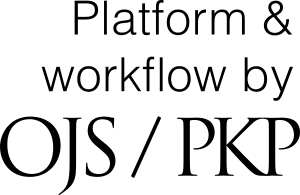
Evaluation of the luminous and thermal comfort in a 'transparent' office space with single and double-glazing under a sunny clear sky
 View 927/
 415
DOI:
https://doi.org/10.69717/jaest.v3.i2.70Keywords:
Transparency, office work, hot and arid climate, double glazing, luminance, energy consumptionAbstract
The main objective of this study is to evaluate the light and thermal comfort in a 'transparent' office. This last term designates a working space whose outer wall is entirely glazed by a simple transparent glazing in a first case, and a transparent double glazing in a second case, in the context of arid environments with a hot and dry climate and therefore under the sky Bright sunny. Various solar protections are used for the case of simple glazing and the best performing among them is maintained for office simulations with double-glazing. The study was carried out using an experimental approach. Thus, computer simulations using ECOTECT and RADIANCE softwares were carried out for transparent desk models in order to evaluate: i) illuminance on the worktop ii) luminance in the field Visual, (iii) indoor air temperatures, (iv) and annual energy consumption. It was carried out for south-facing offices at a location with a latitude of 34.48° North and a longitude of 5.73° East. The evaluation of the results obtained is based on recommended reference values for the various simulated indicators. Based on the results obtained from natural light and thermal performance in a single-glazed transparent office, the cases tested were classified according to their degrees of performance in order to choose the optimal orientation for the case of south orientation. In this respect, one notes essentially the performance of the office whose facade is a curtain wall double transparent windows oriented South equipped with a system 'Light shelf'.
Downloads
Downloads
Published
Issue
Section
License

This work is licensed under a Creative Commons Attribution-NonCommercial 4.0 International License.
Copyright and Licensing Terms
Journal of Applied Engineering Science and Technology (JAEST)
Effective September 2026, JAEST adopted the Creative Commons Attribution 4.0 International License (CC BY 4.0) for newly published articles.
Under this license, readers may share, distribute, reproduce, adapt, and reuse published articles, including for commercial purposes, provided that appropriate credit is given to the original authors, the license is linked, and any changes are indicated.
Authors retain copyright of their work and grant JAEST the right of first publication.
Current Publication License: CC BY 4.0
Note on previously published articles: Articles published before September 2026 remain subject to their originally applicable licensing and copyright terms unless a change has been authorized by the respective rights holders. The current CC BY 4.0 policy does not automatically relicense previously published content.
For complete information, consult the JAEST Open Access Statement .